
- Home
- Security
- Email Services
- Website Tools
Masterpiece X - Generate is the first generative 3D application that allows users to create 3D assets, including mesh, textures, and animations, using just a few words. This innovative tool offers a simplified and intuitive way to turn creative ideas into 3D reality, without the need for complex software or skills. Users can describe the type, shape, and appearance of the 3D model they want, and the tool generates it within minutes. It's a new approach to explore, prototype, and evolve ideas in 3D, making it accessible for everyone with a keyboard and a web browser. Additionally, it offers compatibility with popular game engines and apps.


Midjourney for Slack is an unofficial port of Midjourney that allows users to create stunning images with AI directly in their Slack workspace. It is a simple and fun way to share creative ideas with others in the team. The first 5 image creations are free, and users can upgrade to a paid plan after that. It has been met with positive reviews from users all over the world.
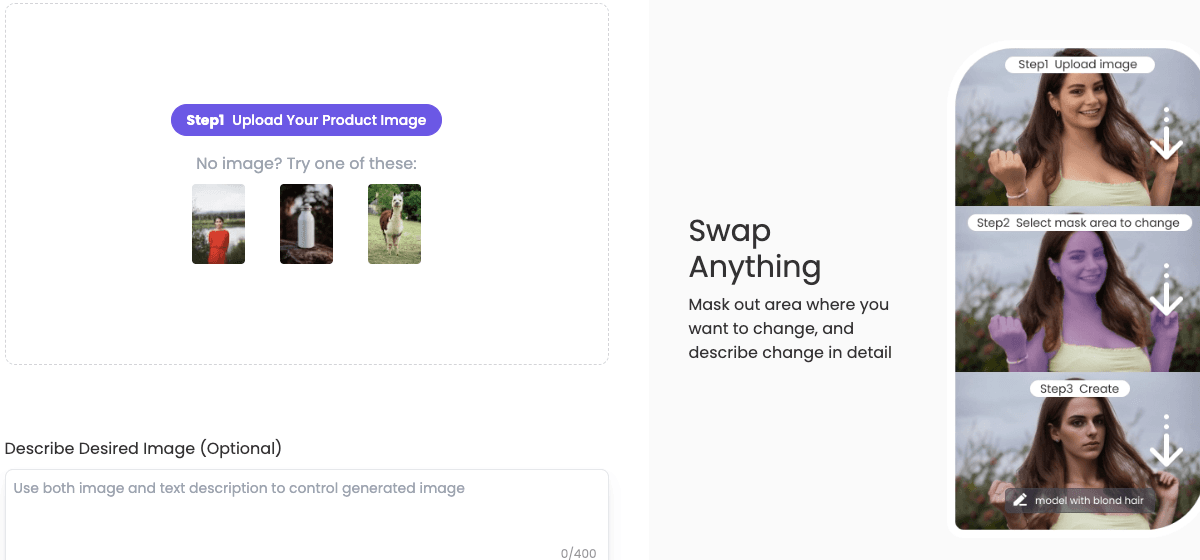
Swap Anything tool is an AI image generator that allows users to generate images with various styles, backgrounds, and resolutions. Users can also use the tool to generate room designs, product backgrounds, and swap anything with different images. The tool also provides tips and prompt guidance to help users describe the desired image and get the best results.

Kombai is a new tool that uses deep learning and heuristics models to help developers generate high-quality UI code from design files. It allows developers to quickly and easily create code with no need to tag, name, or group elements or use auto-layout. Kombai generates DOM structure, flex-related CSS, React components, high-quality JS code with loops & conditions, and form elements as functional components. It also uses "design prompt engineering" to allow developers to get the code they want. Kombai is currently in “public research preview” and is free to use for individual developers.

The Zoo Image Playground is a tool that uses a variety of text-to-image models to generate high-quality images from text input. It uses models such as stable-diffusion, DALL-E, kandinsky-2, deepfloyd-if, and material-diffusion to generate photo-realistic images from any text description.